
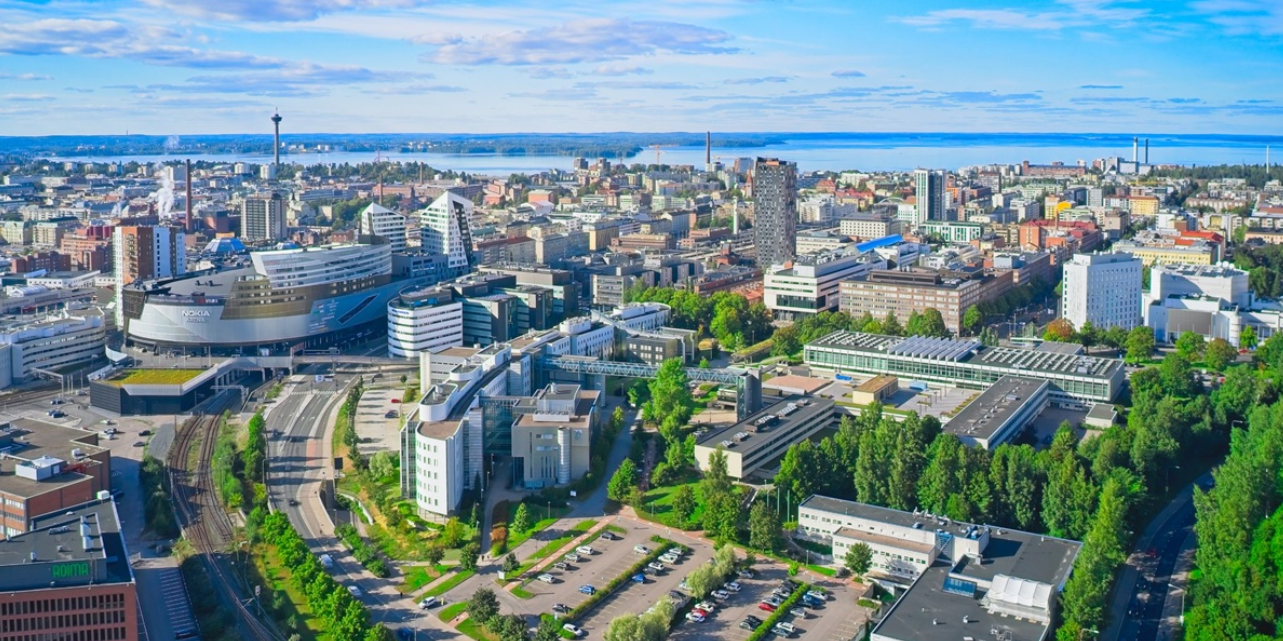
This year’s national foresight event focusing on the future of regions and cities was held in Tampere in close cooperation with Innokaupungit, bringing together around 130 participants at Technopolis.
The theme of the opening day, “Regions’ strengths for the benefit of all Finland,” highlighted key questions surrounding Finland’s growth challenges and, above all, the opportunities that could help build future growth. The development of energy production, strong transmission capacity and the decentralisation of production, networks and storage were identified as major opportunities for new growth.
One recurring message throughout the event was the importance of daring to specialise. Among the examples highlighted were quantum technology, presented through Pauliina Rajala, of InstituteQ and Miska Hakala of Enter Espoo, as well as developments in medicine presented by Sirpa Jalkanen and Jarkko Koivunen of InFLAMES.
From an industry perspective, developments in the defence sector and dual-use solutions emerged as one of the most dynamic themes and markets with significant growth potential. Several hubs have already been built around the topic, but the event repeatedly raised the question of whether a small country like Finland should cooperate more closely as a whole instead of functioning as a set of small, overlapping and competing cities and regions on the European and global stage. This also prompted reflection on whether the Jakobstad region could position itself as part of both the Oulu IT and data cluster and the Vaasa energy cluster. That would, however, require a clearly defined and active role, along with shared expectations for the outcomes of such cooperation.
When it comes to energy-related themes, and particularly the value chain linking minerals, mineral products, chemicals and metals, the Jakobstad and Kokkola regions could also look more closely at synergies with projects in Norrbotten in Sweden. Several such projects are already under way in the area, with Arctial being the largest.
The second day focused more on urban development, but from my perspective the main takeaway was how smaller regions and regional towns can become part of larger urban areas in a genuinely mutually beneficial way. Seeing the momentum that ecosystem funding has generated for the C27 cities also raises a broader question: where are the current state programs and financing instruments aimed at developing regional urban areas—especially when the Jakobstad region is one of the few such areas still growing?
Contact: Fredrik Sandelin, Regional Developer, 044-324 3435, fredrik.sandelin@concordia.jakobstad.fi